Integrating Card Rails and Digital Wallets: Compatibility Decoding in Subscription Platforms for Recurring Revenue
Written by Frankie Keller · Sep 13, 2026
Integrating Card Rails and Digital Wallets: Compatibility Decoding in Subscription Platforms for Recurring Revenue
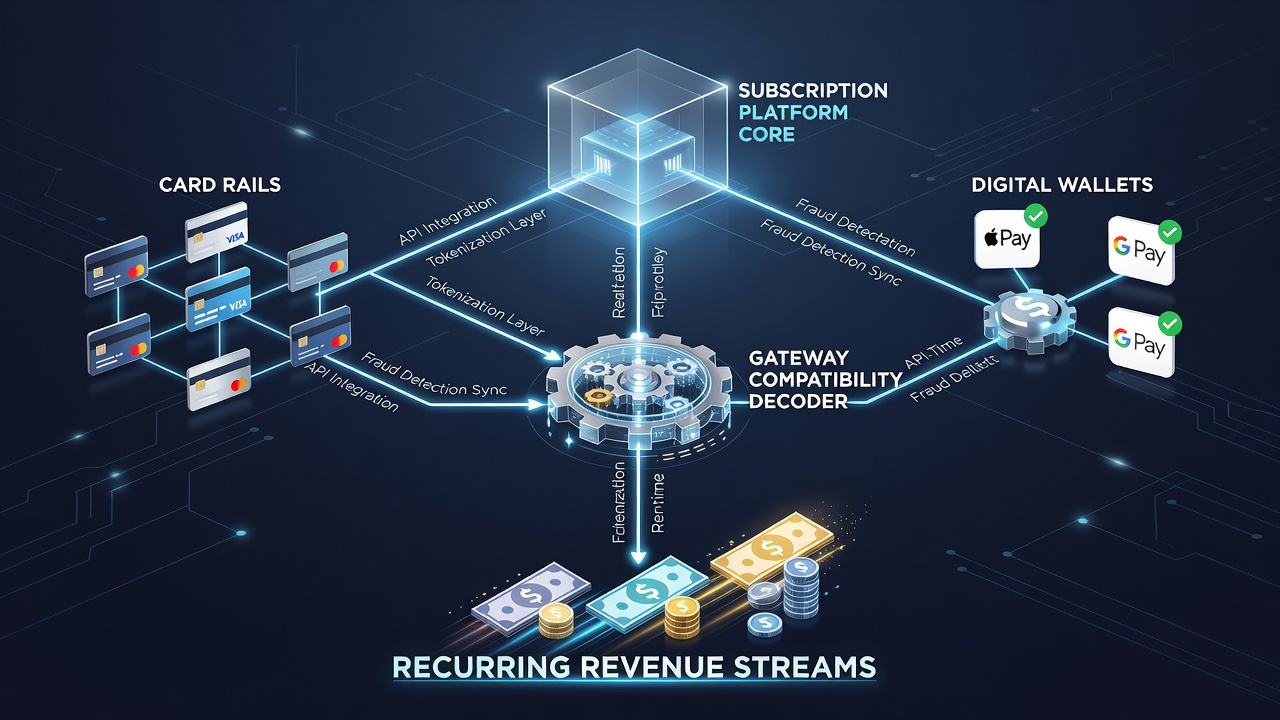
Subscription platforms manage recurring revenue by aligning payment gateways with both traditional card rails and digital wallet systems, and this process begins with detailed compatibility checks that verify protocol support across multiple networks. Data from industry reports indicate that these checks focus on API endpoints, token formats, and authentication standards before any recurring billing cycle activates.
Platform operators review gateway documentation to confirm support for card network requirements such as ISO 8583 messaging alongside wallet-specific protocols like those used by major providers for tokenized transactions. Research indicates that mismatches in these areas often lead to declined recurring authorizations, which platforms address through pre-integration testing environments.
Core Compatibility Layers Examined by Platforms
Engineers examine several layers when pairing card rails with digital wallets, starting with network tokenization where card details convert into secure tokens that wallets can store and reuse across billing periods. This approach reduces exposure while maintaining compatibility with recurring payment schedules set by merchants.
Authentication protocols form another critical layer, and platforms verify that gateways handle 3D Secure 2.0 flows for cards while supporting biometric or device-based confirmations common in wallet transactions. Observers note that September 2026 saw updated specifications from the European Central Bank on strong customer authentication that influenced how many platforms adjusted their testing routines for cross-rail compatibility.
Technical Integration Steps and Validation Processes
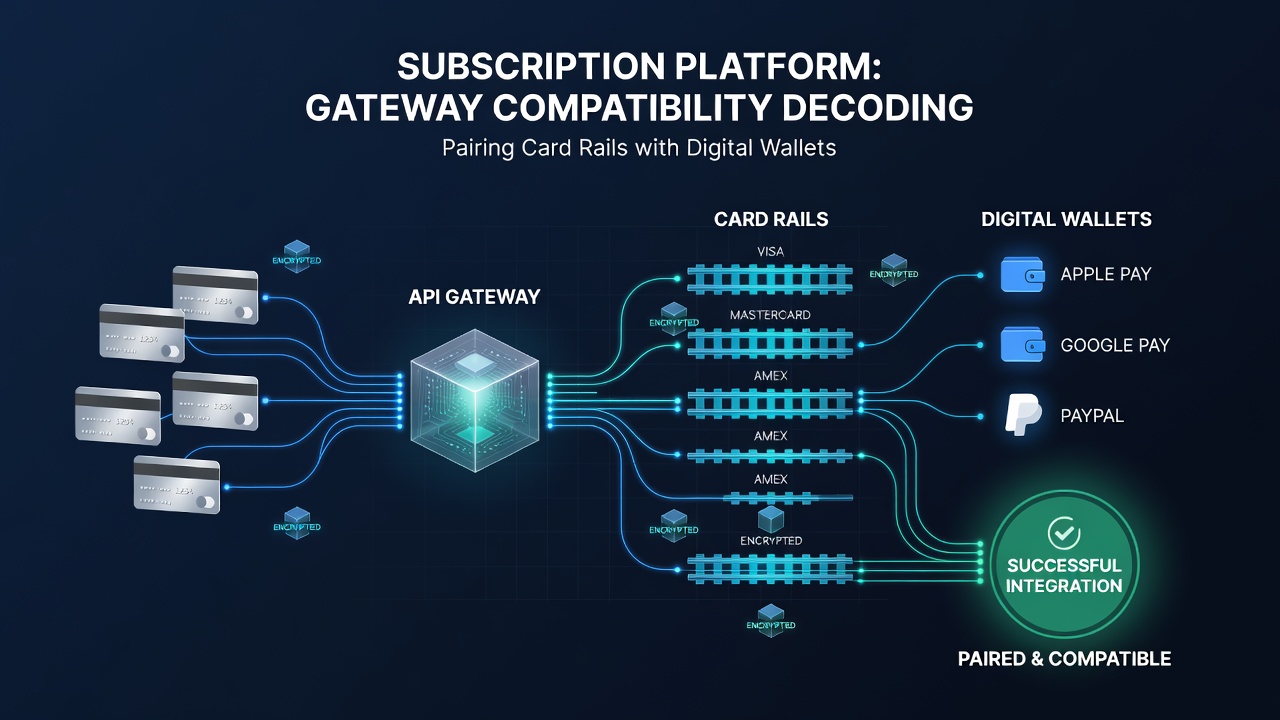
Teams at subscription platforms follow structured validation sequences that include sandbox simulations of recurring charges, where a card rail processes an initial authorization and a digital wallet handles subsequent renewals to confirm seamless handoffs. These simulations track response codes and latency metrics to identify friction points before live deployment.
Token lifecycle management requires careful coordination because digital wallets often generate their own tokens that must map correctly to underlying card credentials stored in gateway vaults. Figures from payment network analyses reveal that successful mappings reduce failure rates in recurring streams by aligning expiration data and issuer updates across systems.
Compliance and Security Alignment Across Rails
Regulatory frameworks demand that platforms maintain consistent security postures whether transactions route through card networks or digital wallets, and this includes PCI DSS compliance checks that cover data storage practices on both sides. A report from the Federal Reserve highlights how aligned encryption standards help platforms avoid separate audit trails for each rail.
Platforms also evaluate issuer-specific rules that apply to recurring payments, such as those governing stored credential transactions on cards versus wallet-based mandates that require explicit consumer consent at setup. Data shows these evaluations prevent interruptions when card issuers update their policies mid-cycle.
Case Examples from Operational Deployments
One subscription service handling media content integrated a gateway that supported both card rails and digital wallets by mapping recurring schedules through a unified dashboard, allowing automatic fallback from wallet failures to card retries without manual intervention. Studies of similar setups found reduced churn when compatibility testing included edge cases like expired wallet tokens.
Another example involved a SaaS platform that worked with regional gateways to ensure digital wallet recurring payments complied with local data residency rules while card rails followed global network standards. Research indicates such hybrid approaches maintained revenue continuity during periods of regulatory change.
Conclusion
Subscription platforms continue refining their methods for decoding gateway compatibility as card rails and digital wallets evolve in parallel, relying on systematic testing and protocol alignment to support uninterrupted recurring revenue streams. These efforts draw on ongoing data from network operators and regulatory updates to sustain reliable pairings across diverse payment environments.