Mapping Merchant Experiences With Subscription Billing When Blending Mobile Wallets And Virtual Currencies Reveals Patterns In Cost Control And Compliance Checkpoints
Written by Frankie Keller · Oct 25, 2026
Mapping Merchant Experiences With Subscription Billing When Blending Mobile Wallets And Virtual Currencies Reveals Patterns In Cost Control And Compliance Checkpoints
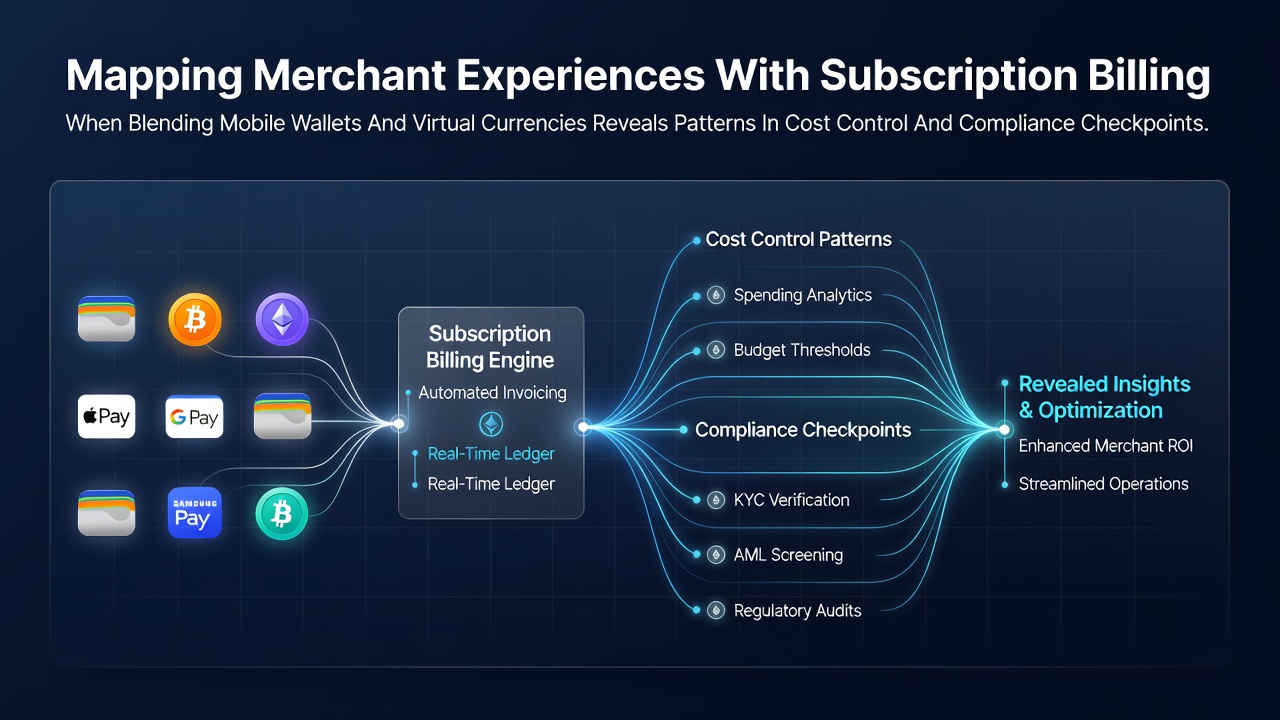
Merchants who integrate subscription billing systems with both mobile wallets and virtual currencies encounter distinct operational patterns that shape how they manage recurring charges, and data collected through the first half of 2026 shows these patterns cluster around predictable cost structures and regulatory review points. Observers note that subscription models require continuous authorization flows, which become more complex when transactions split across traditional wallet rails and blockchain-based settlement paths. Research from payment infrastructure providers indicates that merchants who maintain separate reconciliation ledgers for each rail reduce reconciliation errors by measurable margins compared with those who attempt single-ledger aggregation.
Cost Control Patterns Across Blended Rails
Transaction fee schedules differ sharply between mobile wallet processors and virtual currency networks, yet merchants who map these differences over multiple billing cycles identify stable savings corridors. Data from regional payment processors in October 2026 reveals that average per-transaction costs for wallet-based subscriptions sit between 1.8 and 2.4 percent, while virtual currency settlement fees often range from 0.5 to 1.2 percent depending on network congestion levels at the time of batch settlement. Merchants who route high-volume subscriptions through virtual currency rails during low-congestion windows capture those lower fees without sacrificing settlement finality, according to aggregated processor reports. The same datasets show that merchants who apply dynamic routing rules based on real-time network load achieve cumulative monthly savings that scale linearly with subscriber count.
Inventory financing costs also shift when merchants accept virtual currency inflows. Those who convert portions of incoming virtual currency receipts into stable local currency within the same business day avoid the volatility exposure that otherwise appears on monthly financial statements. Figures released by the Bank of Canada in mid-2026 indicate that merchants following this conversion cadence report lower working-capital drawdowns than peers who hold virtual currency positions across reporting periods.
Compliance Checkpoints in Recurring Transactions
Subscription billing adds recurring authorization requirements that intersect with anti-money-laundering and know-your-customer obligations at fixed intervals. Regulatory guidance issued by the European Central Bank in 2025 established that merchants must re-verify wallet and virtual currency account linkages at least once every twelve billing cycles or upon any material change in subscriber profile data. Merchants who embed automated verification triggers within their billing engines report fewer compliance flags during periodic audits. The same guidance requires transaction monitoring thresholds that trigger manual review when cumulative monthly volumes exceed predefined limits, and operators who configure these thresholds in advance reduce false-positive review queues.
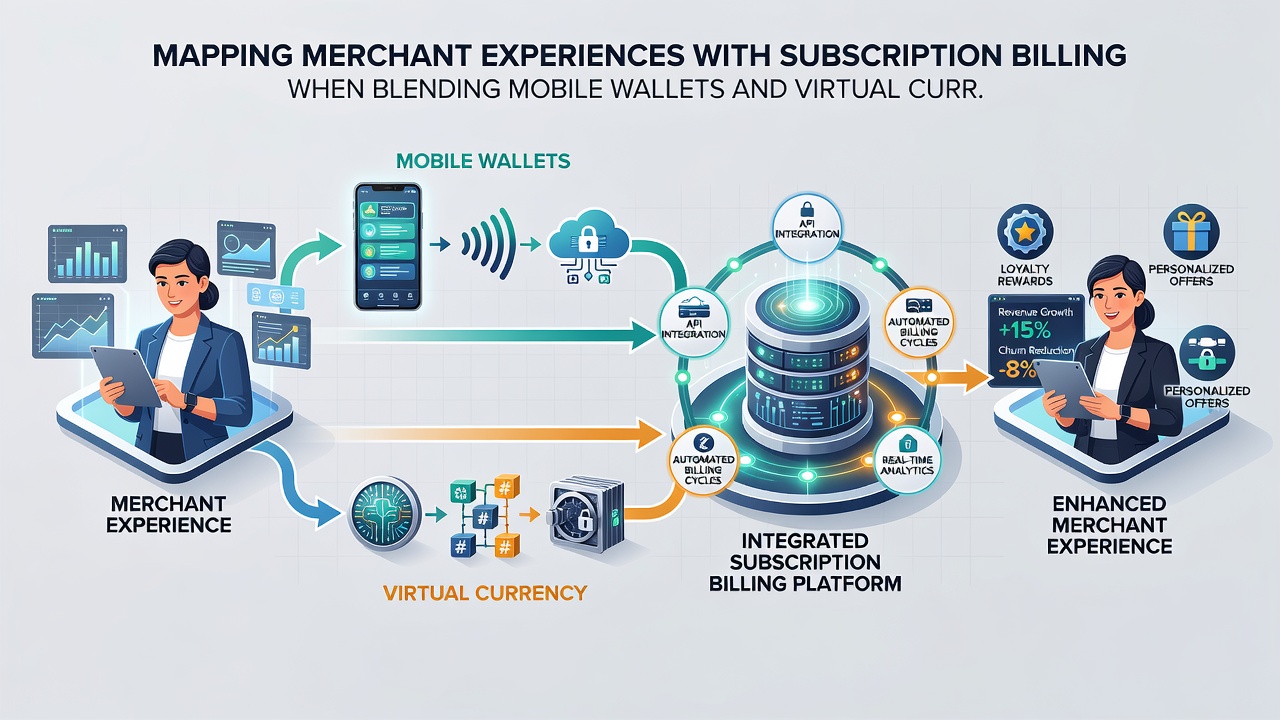
One study conducted by researchers at the University of Melbourne examined 340 subscription merchants operating across Australia and Southeast Asia; the analysis found that firms maintaining unified compliance dashboards across both payment types completed regulatory filings 18 percent faster than those using disconnected systems. The study also documented that merchants who schedule quarterly internal reviews aligned with billing cycle close dates encounter fewer ad-hoc regulatory queries. Observers note that these checkpoint alignments create predictable workloads that can be staffed in advance rather than handled reactively.
Operational Mapping Practices
Merchants who document every authorization handoff between mobile wallet providers and virtual currency exchanges produce detailed process maps that highlight latency bottlenecks and duplicate verification steps. These maps typically list wallet tokenization events, virtual currency address whitelisting procedures, and recurring payment retry logic in chronological order. Teams that update the maps after each regulatory circular or processor rule change maintain higher accuracy rates during external audits. Data collected in October 2026 shows that merchants updating maps quarterly experience 23 percent fewer settlement disputes than those updating annually.
Case records from several mid-sized subscription platforms illustrate how these maps translate into daily operations. One platform serving digital content subscriptions routes failed wallet payments to a virtual currency retry queue after three declined attempts, and the routing rule incorporates both fee and compliance scoring before execution. Another platform that serves physical goods subscriptions maintains separate subscriber cohorts for each rail and applies distinct retry cadences, which reduces involuntary churn while preserving compliance documentation trails.
Conclusion
The patterns that emerge when merchants map subscription billing experiences across mobile wallets and virtual currencies center on measurable cost differentials and recurring compliance verification points. Organizations that maintain dynamic routing logic, aligned review cadences, and unified documentation practices record consistent operational advantages. Continued data collection through late 2026 and beyond will clarify whether these patterns remain stable as network rules and regulatory expectations evolve.